Art on the edge: In a process that requires technical precision down to tenths of a millimeter, deburring ensures that edges meet specifications exactly—and that components function reliably.
A brief guide: Deburring
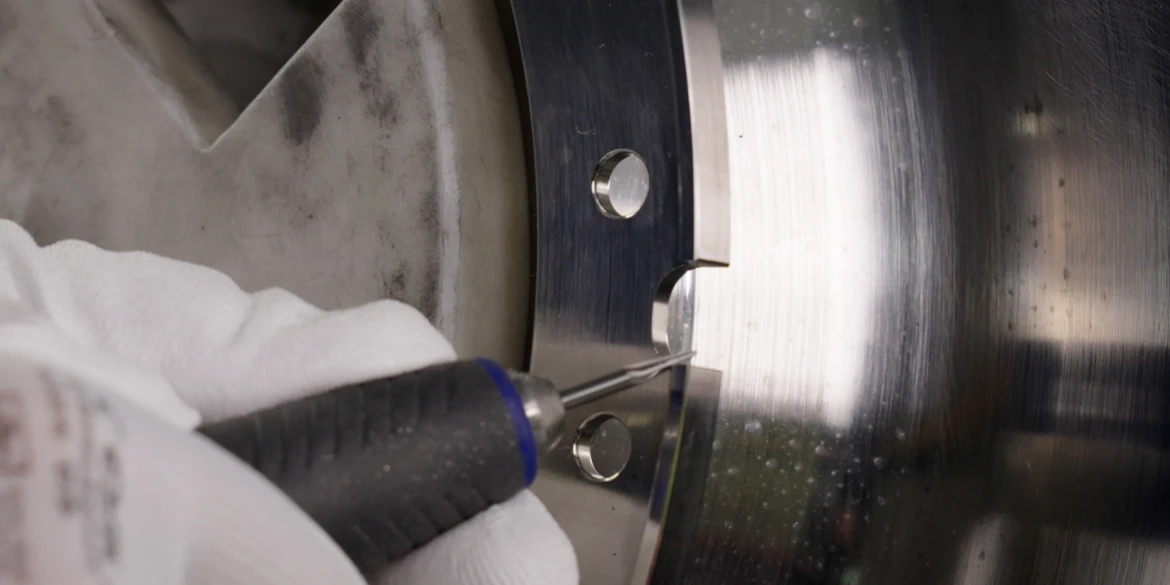
The machine has long since come to rest, and the component is basically finished. Basically. But its edges still bear features that don’t belong there: fine protrusions, barely visible but tangibly sharp. This is where Tobias Kosch and Tayeb Lahmek, deburring specialists at MTU Aero Engines, get to work. As they reach for sanding belts, milling cutters, and measuring tools, there’s one key thing they bring to bear: a wealth of experience.
“Like the name suggests, deburring involves removing protruding burrs and smoothly rounding off edges,” Lahmek explains. Burrs form during nearly every machining process, such as milling, drilling, or turning. As these processes remove metal, they can cause deformations and leave behind tiny protrusions. What seems harmless at first can become a problem later on: Burrs can initiate fatigue cracks, cause imbalances, or, in the worst case, lead to engine failure—for example, if a rotor disk ruptures. What’s more, the small protrusions pose a risk of injury to employees.
The final step is what matters
For Kosch, deburring is more than just finishing work. “We’re the final step in the manufacturing process,” he says. “Without us, it all falls apart.” It’s true that components don’t leave the production line until their every edge meets the specifications. Depending on the component, specific fillet radii are required, often in the range of tenths of a millimeter. Removing too much material is just as critical as removing too little.
This is because any change to an edge affects the component’s geometry. “Drawings and technical specifications define exactly how we need to machine each edge. Some areas require only a slight chamfer, while others require a specific radius. The key thing here is to preserve the component’s original function—or make it possible in the first place,” Lahmek says. In some cases, the fillet or chamfer is made visible and measured using special impressions. Only when the dimensions, surface, and transitions fit exactly is the component approved for assembly.
Step-by-step guide: the deburring process.
Achieving the perfect edge step by step
The deburring process varies depending on the component, but always follows a clear principle. First, sharp edges and burrs are carefully removed using a milling cutter to create an initial contour. This contour is then rounded off using a sanding belt. The final step is polishing, which smooths out the transitions and improves the surface finish.
MTU is currently testing how technology might complement the deburring process. This involves having a robot handle clearly defined, physically demanding tasks—especially when working on heavy or large components. “It’s a new technology and one we’re still developing,” Kosch says. “But it helps us maintain consistent quality and make our work more ergonomic.”
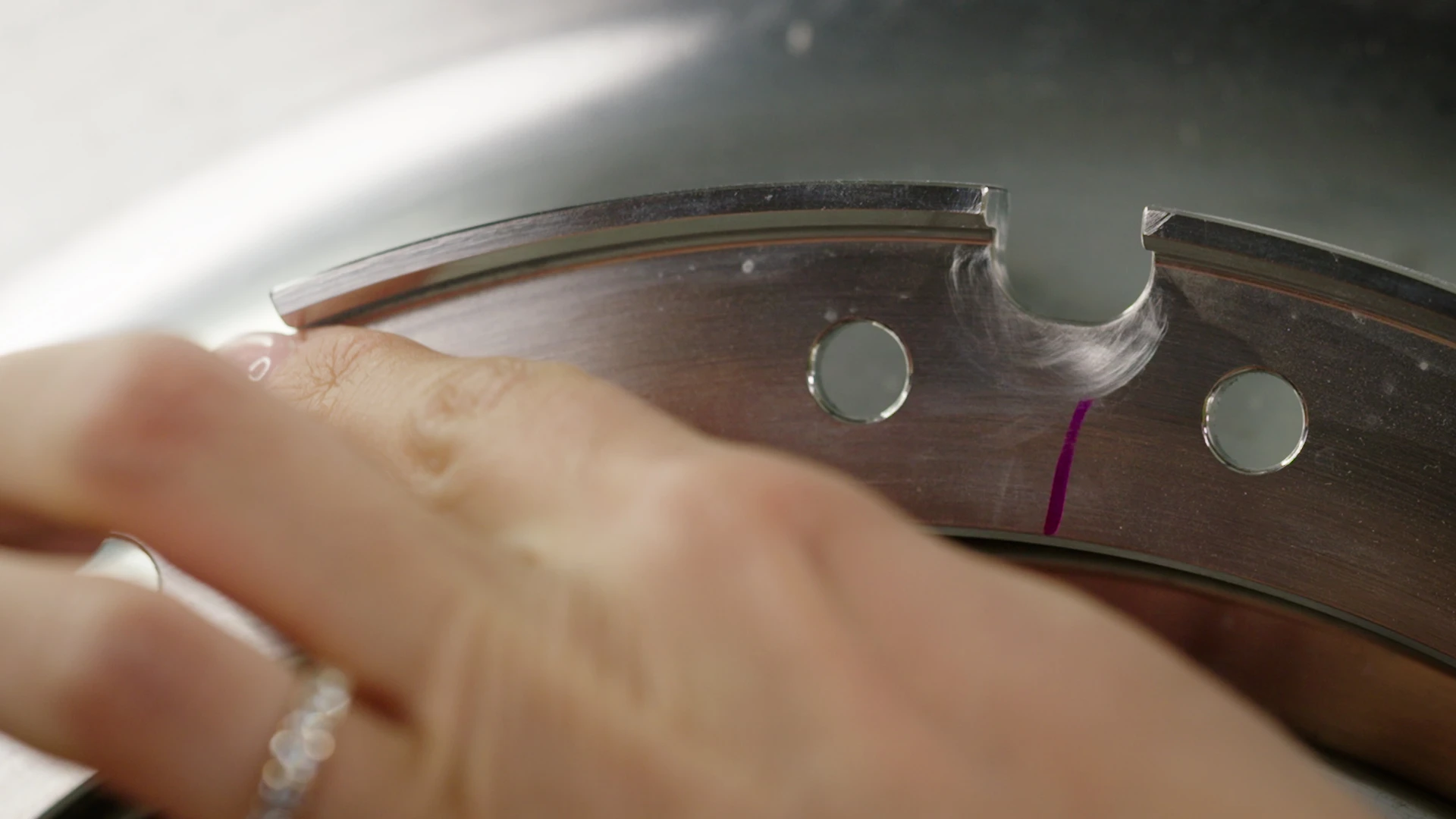

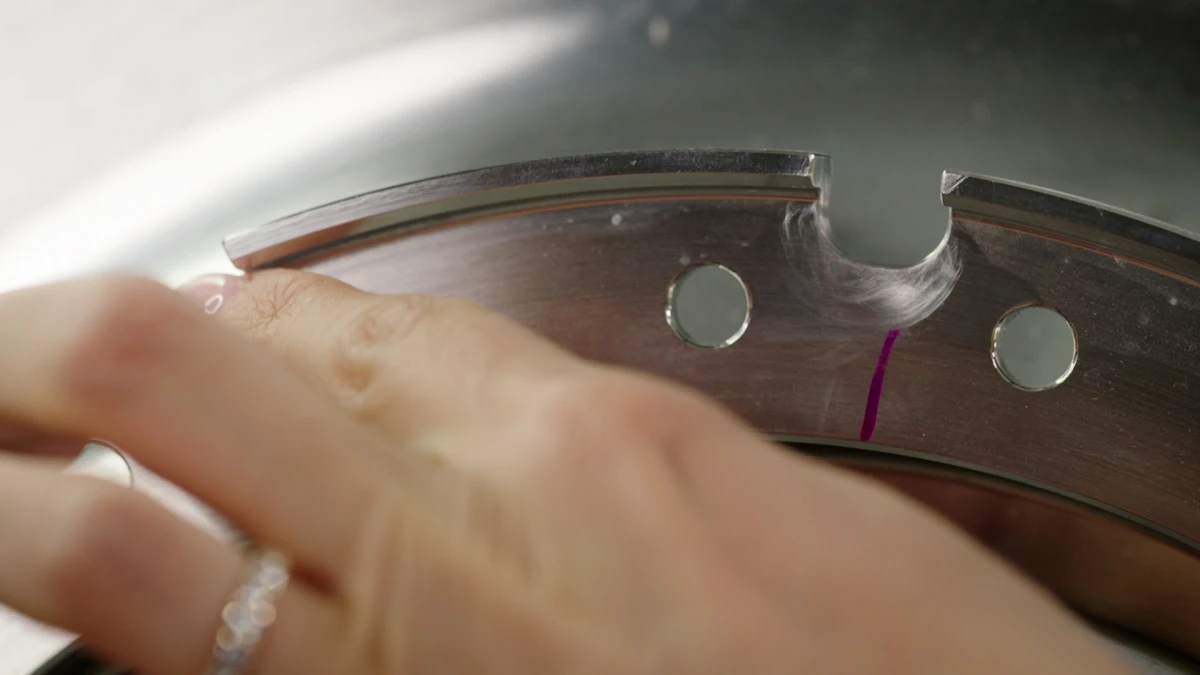
In the end, you’re left with a component that shows no visible signs of machining. Perfectly prepared for the next step.
Handcraftsmanship is indispensable
However, both deburring specialists consider one factor to be crucial: Handcraftsmanship is here to stay. “There’s no replacing dexterity and a delicate touch,” says Lahmek, who’s been working in this profession for nearly three decades. “They’re not something you can develop from one day to the next; it takes experience. It’s a kind of art.”
In the end, you’re left with a perfect component that has no sharp edges and no visible signs of machining. For Kosch, that’s exactly what makes deburring so special: “You can’t see it, but you notice right away when it’s missing.”
FAQ
What is meant by “deburring” in engine production?
In the aerospace industry, deburring refers to the precise removal of sharp material protrusions, or burrs, and the controlled rounding of component edges. Since these burrs are formed during machining processes such as milling or drilling, their removal calls for machining to within a few tenths of a millimeter in line with strict technical specifications to ensure that the components retain their exact geometry.How do burrs form during the manufacture of metal components?
Burrs form when material is locally displaced or incompletely removed during machining processes. Typical processes such as milling, drilling, or turning generate strong mechanical forces, causing material to bulge at the edges and form small protrusions, called burrs. The shape and size of the burrs depend on factors such as tool wear, material properties, and process parameters. In engine production, these burrs must be systematically removed to ensure the precision and reliability that’s required later on.How precisely must edges be deburred during the manufacture of engine components?
In the aerospace industry, deburring requires precision in the range of a few tenths of a millimeter. Technical drawings specify exactly whether an edge should simply be chamfered or rounded to a specific radius. Extremely tight tolerance limits apply to MTU Aero Engines components, as excessive material removal can compromise their geometry and function. This unrelenting precision ensures that highly stressed engine components can withstand the extreme mechanical and aerodynamic demands of flight operations.What tools and methods are used for deburring?
Deburring involves the use both of manual tools, such as sanding belts and milling cutters, and of automated processes. The choice of method depends heavily on the component, the material, and the required precision. Manual deburring allows for highly flexible and precise machining of complex geometries, while automated processes such as brushing, grinding, or electrochemical deburring deliver consistent quality for large production runs. MTU carefully combines these two approaches to ensure both production efficiency and the highest surface quality of the engine components.Why is manual work still essential for deburring, even with automation?
While modern machinery offers certain advantages, complex component geometries require the delicate tactile sensitivity and trained eye of experienced specialists. At MTU Aero Engines, skilled personnel combine manual dexterity with technical expertise to determine how much material can be removed without compromising the component’s function.How does deburring affect the service life and reliability of components?
Deburring increases the service life and reliability of components by reducing stress points and ensuring forces are distributed evenly. Smooth, cleanly rounded edges prevent the formation of microcracks and reduce friction and wear. This is crucial for operational safety, especially in aircraft engines, which are subjected to extreme stresses throughout their service lives. For MTU Aero Engines, precise deburring is therefore a fundamental step in quality assurance, ensuring the engines’ uncompromising operational reliability and longevity over thousands of flight cycles.